

Key Takeaways
When a claim lands on your desk, the question is simple: can you prove what really happened on the road? For many fleets, that answer used to be “no,” which meant relying on memory, partial reports and the hope that a third party would see things their way.
Video telematics has changed that equation. By pairing dashcams with rich telematics data, fleets are moving from anecdote to evidence, protecting their drivers and turning insurance from a purely reactive cost into a strategic lever.
*All of the statistics in this article are drawn from Teletrac Navman’s 2025 Risk and Exoneration Report, which explores how modern fleets are using safety technology to manage risk, exonerate drivers and control insurance spend.
Why Fleets Are Turning to Video Telematics for Insurance Protection
The use of safety technology is now universal. In the fleets surveyed, 100% of respondents used at least one safety solution and 56% deployed five or more technologies as part of a layered risk strategy. Telematics is the backbone of that stack, adopted by 84% of fleets, and nearly half of those users leverage advanced driver behavior capabilities for targeted coaching and rewards.
Critically, 74% of fleets now operate both telematics and dashcams, showing that most operators see the value in connecting what happened (video) with how and where it happened (data). In many cases, those cameras include both road-facing and driver-facing views, providing the context needed to understand incidents fairly and accurately.
This shift is being driven by both financial and human factors:
- 74% cite managing insurance as a top motivation for investing in safety technology.
- 73% prioritize driver safety, while 67% highlight driver wellbeing.
- 84% of respondents specifically point to driver exoneration as a key reason for deploying safety technology.
In other words, video telematics is not just about cutting costs; it is about delivering fair outcomes, protecting professional drivers, and building a foundation of trust across the fleet.
Prevent Collisions with Proactive, Data-Driven Driver Coaching
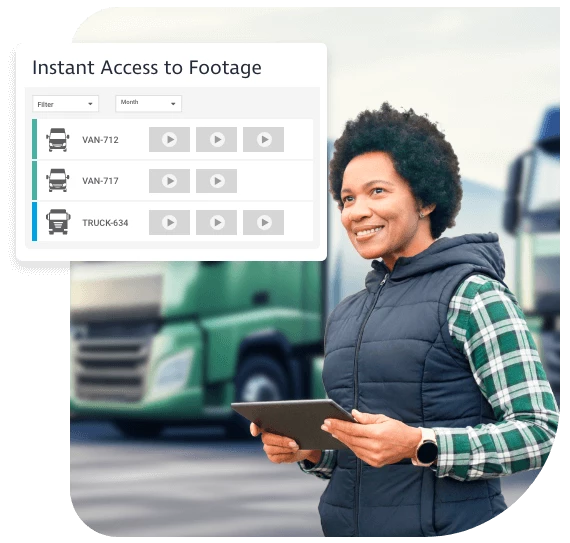
The best insurance claim is the one you never have to file. That is why so many fleets are using video telematics to move upstream, focusing on prevention before an incident occurs. Telematics devices detect high-risk events such as harsh braking, aggressive acceleration, speeding, and excessive idle time, while dashcams record the moments around those triggers, giving managers a complete picture, not just that something happened, but why it happened in the first place.
When these tools are combined, fleet video telematics becomes the engine behind smarter coaching rather than a simple recording device. Driver scorecards and structured coaching programs can highlight patterns over time instead of reacting to one-off actions, while real-time audio alerts in the cab warn drivers as soon as their behavior crosses a risk threshold. Then, mobile coaching apps let them review their own footage and metrics so they can turn data into practical self-improvement.
Defend Drivers Against False and Inflated Insurance Claims
Even with strong coaching in place, incidents happen. When they do, video telematics becomes a shield for your drivers and your balance sheet.
The report reveals that 34% of fleets believe they have been impacted by fraudulent motor claims. That is more than a third of operators dealing with allegations that may be exaggerated or false, with the potential to drive up premiums and damage reputations.
However, fleets that have invested in video telematics see a very different story. Among fleets that suffered accidents in the past 12 months, 53% were able to exonerate a driver using evidence from their systems. When a claim comes in, high-definition video synced with location, speed, and event data can quickly answer crucial questions:
- Was the driver actually speeding or tailgating?
- Did another road user cut in, brake sharply or run a light?
- Was the driver distracted, or did they respond appropriately in a no-win situation?
Instead of a he-said-she-said argument, fleets can present a clear, time-stamped account of what happened, often within minutes of the incident. For drivers, that means fair treatment and protection from being blamed for events beyond their control. For businesses, it is a powerful deterrent against opportunistic claims and a vital tool in preserving claims histories.
Teletrac Navman’s Video Telematics platform is designed specifically for this environment, combining high definition video with AI-driven insights to uncover risky behaviors, minimize blind spots, and provide the evidence operators need to protect both drivers and the business.
Speed Up Claims, Reduce Costs and Stabilize Premiums
Fast, accurate information is the currency of insurance, and the 2025 Risk and Exoneration Report shows just how powerful that currency becomes when fleets unite telematics data with video evidence. Seventy percent of respondents say that combining camera footage with telematics data reduces the time it takes to process accident claims, 85% report greater control over insurance premiums after implementing safety technology, and 65% have seen those premiums decrease as a result, a clear sign that better information is reshaping the financial side of risk.
This is where video telematics changes your insurance strategy from reactive to proactive. When an incident occurs, your team can move quickly: first notification of loss can be triggered with confidence because it is backed by verified data and video; secure clips and event reports can be shared with insurers so they can assess liability without delay; and the long view of your operations, captured through telematics trends and driver scorecards, can demonstrate that you are running a disciplined safety culture rather than reacting case by case.
Even when a claim cannot be avoided, this level of transparency cuts the time to resolution and often the overall severity of the claim. Insurers gain confidence in your documentation and processes, and in return, you position your fleet for better terms and a more stable premium.

Overcoming Privacy Concerns and Building Driver Trust
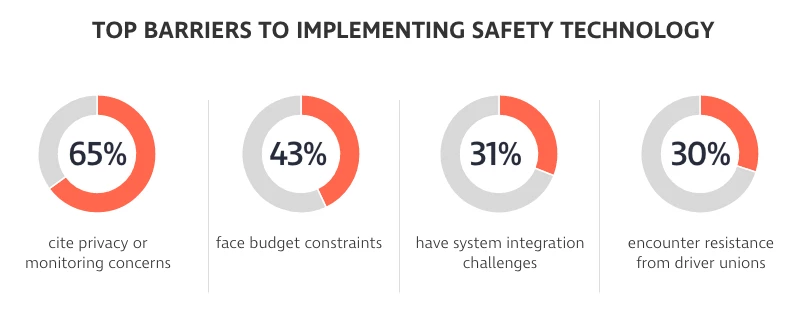
Despite the clear benefits, some fleets still hesitate to deepen their investment in video telematics and other safety technologies. The report highlights the top barriers:
- 65% cite privacy or monitoring concerns.
- 43% face budget constraints.
- 30% encounter resistance from driver unions.
- 29% worry about operational disruption during rollout.
Those concerns are real, and they need to be addressed thoughtfully. Yet the same data reveals a crucial insight: once safety technology is deployed, attitudes shift dramatically. An overwhelming 87% of fleets report positive driver sentiment post-deployment.
Why the change? In most cases, fleets that succeed with video telematics:
- Lead with safety, not surveillance, explaining that the primary purpose is to protect drivers and resolve incidents fairly.
- Create clear data policies, outlining what is recorded, how footage is used and who can access it.
- Use insights to recognize and reward safe driving, not only to highlight issues.
When your team can see how video telematics directly safeguards them from false accusations, they become strong advocates rather than reluctant participants.
A Proactive Future: Why Now Is the Moment for Fleet Video Telematics
The survey data paints a clear picture of where the industry is headed, and it is firmly pointed toward proactive safety. Seventy-six percent of fleets plan to invest in proactive safety technology in the coming year, with 41% prioritizing vehicle inspection and maintenance software, 40% looking to expand driver training and coaching apps, and 39% focusing on fatigue management solutions. These choices show a deliberate shift from responding to incidents after the fact to identifying and addressing risk well before it turns into a collision.
None of these initiatives exist in isolation; they become far more powerful when anchored by a connected video telematics platform. When inspections, driver coaching, maintenance records and incident footage all flow into a single narrative, fleet leaders can spot emerging risks early, correlate vehicle condition and driver behavior with real-world outcomes, and present a compelling story of continuous improvement to insurers, regulators, and customers.
Whether you are just beginning your journey with video telematics or upgrading to a more advanced, AI-enabled system, this is a strategic inflection point. Fleets that act now will not only protect themselves from today’s claims, they will also build a long-term competitive advantage based on safety, trust and operational resilience.
Turn Video Telematics into A Strategic Asset with Teletrac Navman
Video telematics is no longer a nice-to-have; it is a core component of modern risk management. The fleets in Teletrac Navman’s 2025 Risk and Exoneration Report are proving that integrated camera and telematics solutions are enabling proactive coaching, protecting drivers against false and exaggerated claims, accelerating claims handling, bringing insurance costs under control and ultimately developing a culture of safety that drivers genuinely support.
When every claim can be backed by clear, contextual evidence, you protect what matters most, your people, your reputation, and the future of your business. Visit Teletrac Navman’s Video Telematics page and find the video telematics solution that fits your safety goals.