
Key Takeaways
Equipment profitability problems rarely begin with one major failure. More often, they build through underused equipment, long idle periods, delayed maintenance and limited visibility across jobsites. Our Equipment Management Report found that 93% of operators report operational-efficiency challenges, 47% struggle to keep to a maintenance schedule, and 75% say locating assets is an operational challenge, creating the conditions that lead to equipment hoarding, unexpected downtime and avoidable rental spend.
In this article we expand on the findings in the 2026 Equipment Utilization Report, exploring the role of utilization data and how it is helping fleets create an environment that increases equipment productivity, keeps projects on schedule and reduces unnecessary costs, a concept explored in What is equipment utilization?
Three Profit Leaks That Utilization Data Can Help You Control
1. Equipment Hoarding
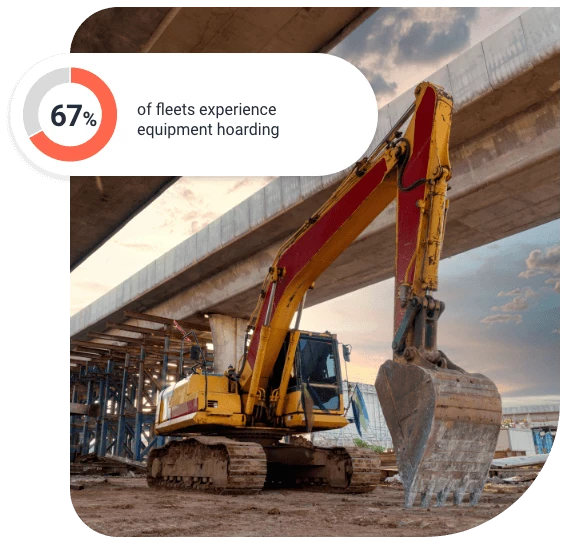
What looks like equipment demand is often equipment being held in the wrong place for too long. In fact, 67% of fleets experience equipment hoarding, driven by delayed maintenance, project uncertainty and a fear of equipment availability, creating artificial shortages that cause project delays and increase unnecessary rentals.
Equipment Management Software gives clear visibility into unused assets helping to prevent hoarding, making it easy to reallocate equipment where it’s most needed. That same visibility is a core step toward right-sizing your fleet and ensuring that your not investing in equipment due to underutilization.
2. Costly Idling
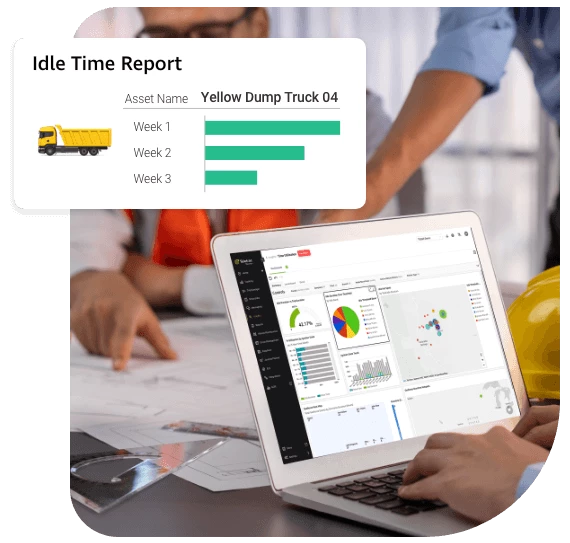
Engine hours don’t always equal productive work. Equipment can appear busy while spending long stretches in non-productive idle time, driving up fuel costs and accelerating wear without meaningful output. Our Equipment Utilization Report uncovered that 78% of operators believe that engine idling significantly contributes to underutilization, by shortening maintenance cycles and creating a perception that equipment is being used.
Telematics can help unearth inefficient idling habits through features like idle time monitoring and real-time diagnostics, giving managers a clearer picture of productive Vs. idle engine time. When you can identify productive use, utilization becomes a practical lever for improving profitability, not just a reporting metric.
3. Reactive Downtime and Avoidable Rental Spend
When maintenance is disconnected from utilization, downtime frequently arrives as a surprise. Equipment seems available until it misses a service, develops an issue or fails an inspection, causing a project delay. An issue emphasized in our Equipment Utilization Report, which uncovered that equipment waiting for maintenance is the top reason for equipment hoarding.
This is where automated, engine-hours-based maintenance makes a difference, helping teams move away from reactive repairs, towards preventative schedules based on actual engine hours, inspection reports or diagnostic alerts. This switch reduces breakdowns, supports up time and helps avoid the emergency rentals that often follow unexpected downtime.
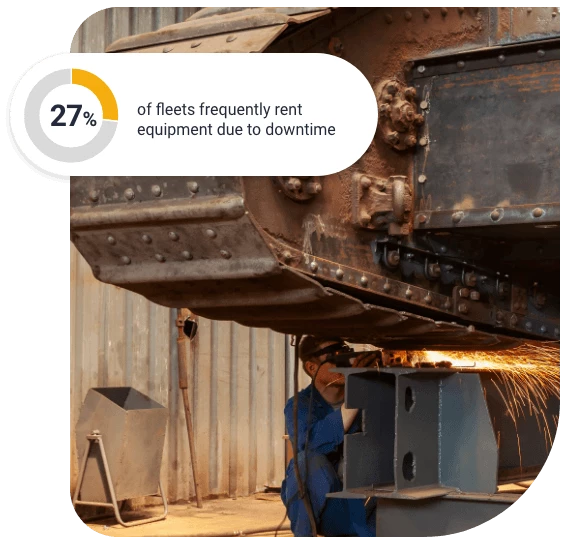
In our Equipment Utilization Report we uncovered that 27% of fleets frequently rent equipment due to downtime, emphasizing the cost of reactive maintenance, and the value of moving to a proactive maintenance workflow that improves efficiency and unlocks savings.
Moving Beyond Reactive Repairs with Engine-Hours Maintenance and Digital Workflows
Reactive maintenance is expensive because it compresses decisions. Parts need to be sourced immediately, crews lose time and service becomes a disruption instead of a planned event. The better approach is to automate maintenance around measurable equipment utilization.
Teams using Maintenance on TN360 can schedule service based on engine hours, odometer readings or fixed intervals and monitor maintenance status through a centralized dashboard. That becomes even more valuable when 47% of operators say maintenance scheduling is a top challenge, 45% point to maintenance cost management, and 96% say these issues affect total cost of ownership.
A connected workflow helps proactive maintenance hold up in day-to-day operations. Across equipment maintenance and operations, inspections, service records and maintenance alerts can work together in one process so teams spend less time chasing paperwork and more time acting on real-time information.
Utilization data becomes far more valuable in that kind of workflow because it helps answer the questions that affect margin every day: Is this asset productive enough? Is it being hoarded or idling too often? Should it be serviced now? Should it be redeployed instead of replaced? The value extends beyond maintenance and utilization, because stronger asset visibility also improves inventory management with more reliable, up-to-date records.
A Utilization and Profitability Scorecard
Use this quick check to see whether your current process is helping you recover value or quietly lose it.
- Can you see which assets are active, idle or underused by jobsite?
- Are maintenance schedules automated from engine hours, mileage or diagnostics?
- Do inspection reports automatically create maintenance events?
- Can site teams see what is available before requesting another rental?
- Can you identify when an asset is missing, hoarded or simply sitting too long?
- Do you have enough data to decide whether to reassign, rent, buy or retire an asset?
If several of these items remain unchecked, the issue usually comes down to data living in too many separate places, with many operators facing recurring visibility, maintenance and efficiency challenges. Bringing data together into a single location which teams can access with ease is the key to unlocking equipment efficiency and profitability.
Proof Point: What Connected Workflows Look Like in Practice
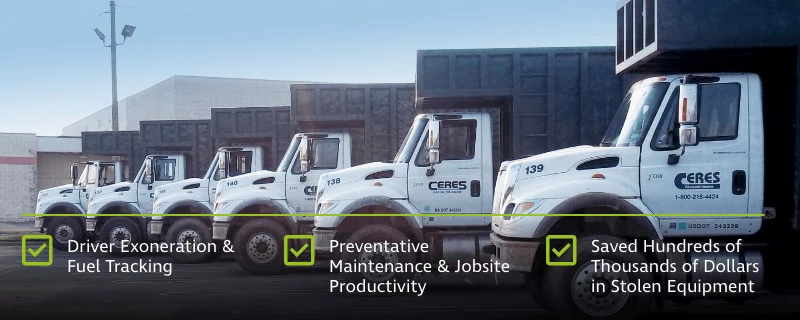
Ceres Environmental offers a strong example of what happens when you connect visibility and maintenance together. The company used asset trackers and geofencing to strengthen oversight of equipment locations, including after-hours alerts when assets left jobsites, and reported recovering hundreds of thousands of dollars’ worth of stolen equipment while also improving maintenance planning through preventative scheduling and earlier service alerts. The real advantage lies in what teams can do with that information once they have it. Earlier visibility supports faster action, stronger planning and better control over cost and risk.
The Solution: One Connected View of Utilization, Maintenance and Profitability
Utilization data is most valuable when it leads to action. It should help you identify stranded assets before they trigger another rental, reduce costly idling before it turns into a fuel and maintenance problem, and schedule service based on accurate engine hours before downtime disrupts a job. Connected equipment management software helps unify those moving parts into a single view teams can depend on day to day.
If your goal is to recover lost revenue, reduce business risk and make better use of every vehicle and asset, explore Teletrac Navman’s equipment management solutions and connect with a specialist to see how utilization data can help improve profitability across your operation.